The Future of Aerospace Manufacturing Through CNC Machining
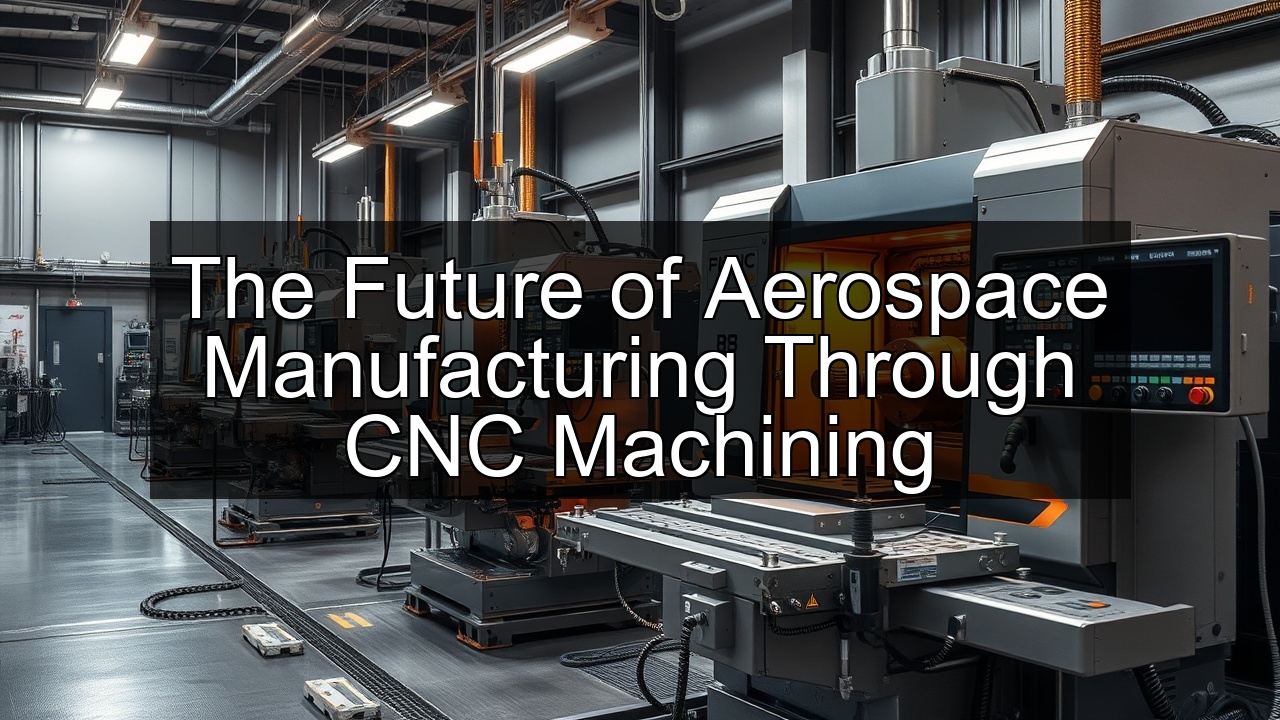
The Evolution of Aerospace Manufacturing
Historical Overview of Aerospace Manufacturing
Aerospace manufacturing traces its roots to the early 20th century when pioneers like the Wright brothers pushed the boundaries of flight with handcrafted wooden frames and fabric coverings. Factories soon scaled up during World War I and II, relying on manual labor and basic tooling to produce aircraft fuselages, wings, and engines. Post-war innovation introduced aluminum alloys and riveting techniques, enabling mass production of jets for commercial aviation. The space race in the 1950s and 1960s demanded unprecedented precision, leading to the adoption of subtractive manufacturing methods where machinists shaped metal workpieces using lathes and mills. By the 1970s, computer-aided design emerged, but manual operations still dominated, limiting efficiency and scalability. Today, this evolution sets the stage for advanced CNC machining, transforming how aerospace components like turbine blades and structural frames get machined with exact tolerances. Historical shifts highlight the industry's relentless drive toward reliability and performance in extreme environments.
The Role of CNC Machining in Modern Aerospace
CNC machining stands as the backbone of modern aerospace production, enabling the creation of complex parts that withstand supersonic speeds and cosmic pressures. Engineers rely on CNC machines to fabricate everything from lightweight titanium airframes to intricate fuel injectors, ensuring compliance with stringent FAA and NASA standards. This technology integrates seamlessly into assembly lines, reducing lead times and minimizing human error during the manufacturing process. In an era where aircraft like the Boeing 787 incorporate millions of machined components, CNC's ability to handle multi-axis operations revolutionizes workflow. It supports rapid prototyping for next-generation designs, such as reusable rockets from SpaceX, where precision defines mission success. Without CNC machining, the aerospace sector couldn't achieve the volume and quality needed for global fleets, underscoring its pivotal role in sustaining innovation and safety.
Comparison of Traditional vs. CNC Machining Techniques
Traditional machining techniques, often manual or semi-automated, involve skilled operators guiding tools across workpieces on conventional lathes and milling machines, a process prone to inconsistencies from fatigue or variations in material. These methods excel in custom, low-volume jobs but struggle with scalability, often requiring days for a single part due to setup times and frequent recalibrations. CNC machining, by contrast, automates these tasks through programmed instructions, executing precise cuts on CNC lathes and mills with repeatability down to microns. While traditional approaches demand constant oversight and generate more waste from trial-and-error, CNC reduces scrap by optimizing tool paths and simulating operations beforehand. In aerospace, where a single flaw can doom a flight, CNC's superior accuracy and speed outperform legacy methods, cutting production costs by up to 50% for high-volume runs. The shift from hands-on crafting to digital precision marks a clear upgrade in efficiency and reliability.
Understanding CNC Machining in Aerospace
Overview of CNC Technologies
CNC technologies encompass a suite of computer-controlled systems that drive subtractive manufacturing, where material removes from a workpiece to form final shapes. At their core, CNC machines interpret digital designs from CAD software, translating them into G-code for automated execution on mills, lathes, and routers. In aerospace, these technologies handle diverse materials like composites, alloys, and ceramics, producing parts with geometric complexity unattainable manually. Multi-axis CNC setups, including 5-axis mills, allow simultaneous tool movement in multiple directions, ideal for contoured wing sections or engine housings. Advancements in servo motors and spindles enhance speed and torque, while software integrations enable real-time monitoring. This overview reveals CNC as a versatile powerhouse, evolving from basic 2D profiling to sophisticated 3D modeling that propels aerospace engineering forward.
Importance of CNC Milling and Turning
CNC milling and turning form the dynamic duo of aerospace fabrication, delivering unmatched versatility for shaping critical components. Milling machines rotate multi-point cutters against a stationary or moving workpiece, carving out slots, pockets, and surfaces essential for aircraft landing gear or satellite frames. Turning, performed on CNC lathes, spins the workpiece while a single-point tool removes material, perfect for cylindrical parts like propeller shafts or missile casings. Together, they address the keyword cnc milling and turning, enabling seamless transitions between flat and rotational operations in one workflow. This combination slashes production time, as shops can machine a fuselage section via milling then refine it through turning without retooling delays. In high-stakes aerospace applications, their precision ensures parts meet tolerances under 0.001 inches, preventing failures in flight. The importance of cnc milling and turning lies in their ability to boost throughput while maintaining the integrity demanded by the industry.
Precision and Accuracy in Aerospace Components
Precision and accuracy define CNC machining's value in aerospace, where even minor deviations can cascade into catastrophic failures. CNC mills and lathes achieve tolerances as tight as ±0.0001 inches, crucial for aligning turbine blades that operate at 2,000 degrees Fahrenheit. Advanced sensors and feedback loops in these machines correct for thermal expansion or vibration in real time, ensuring the workpiece emerges flawlessly machined. In subtractive manufacturing, this level of control minimizes burrs and surface irregularities, enhancing fatigue resistance in components like hydraulic actuators. Aerospace standards, such as AS9100, mandate such exactness, and CNC delivers by programming intricate geometries that manual methods can't replicate. The result? Lighter, stronger parts that optimize fuel efficiency and payload capacity. Ultimately, precision in CNC machining safeguards lives and missions, making it indispensable for the sector's pursuit of excellence.
Key CNC Technologies Transforming Aerospace Manufacturing
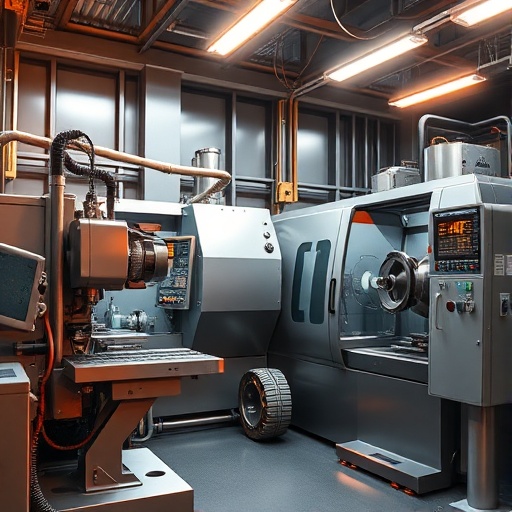
CNC Milling: Techniques and Applications
CNC milling employs high-speed rotary cutters to sculpt workpieces, revolutionizing aerospace through techniques like face milling for flat surfaces and contouring for curved profiles on wing spars. End mills and face mills tackle aluminum and titanium blocks, creating intricate features such as cooling channels in engine blocks. In applications, cnc milling shines in producing structural brackets for the F-35 fighter jet, where 5-axis capabilities navigate undercuts without repositioning. High-definition milling uses fine tools for finishing passes, achieving mirror-like surfaces that reduce drag on aircraft skins. Shops offering cnc milling services integrate coolant systems to manage heat, preventing warping in heat-treated alloys. This technology's adaptability extends to prototyping unmanned drones, where rapid iterations accelerate development cycles. CNC milling's techniques not only enhance part quality but also drive cost savings, solidifying its transformative role in aerospace manufacturing.
CNC Turning: Advantages and Innovations
CNC turning rotates workpieces on lathe machines while tools cut axially or radially, offering advantages like superior concentricity for aerospace shafts and hubs that demand perfect balance. Innovations in cnc turning include live tooling, allowing milling operations mid-turn on the same CNC lathe, which streamlines production of complex valves for rocket engines. Twin-spindle setups double output, machining two ends simultaneously to cut cycle times by 40%. Precision turning ensures roundness within 0.0002 inches, vital for bearing housings in satellite gyroscopes. Turning services leverage bar feeders for continuous operation, ideal for high-volume runs of fastener components. Recent advancements feature hybrid machines combining turning with additive processes, layering material before final machining. These innovations in cnc turning elevate efficiency, reduce setup errors, and support the lightweight designs essential for next-gen aircraft, pushing aerospace boundaries further.
Integration of CNC Programming in Aerospace
CNC programming integrates digital blueprints into actionable code, orchestrating machines to produce aerospace parts with flawless execution. Engineers use CAM software to generate toolpaths for cnc milling and turning, simulating cuts to avoid collisions and optimize feed rates. In aerospace, G-code and M-code scripts control multi-axis movements, ensuring compliance with geometric dimensioning standards for fuselage fittings. Advanced cnc programming incorporates macros for repetitive tasks, like threading on hydraulic fittings, boosting productivity across production lines. Integration with ERP systems tracks workpiece progress, from raw stock to finished component, minimizing downtime. For intricate projects like Space Shuttle replicas, parametric programming adjusts for material variations automatically. This seamless cnc programming fusion enhances traceability, vital for FAA audits, and empowers designers to iterate faster. Ultimately, it bridges creativity and manufacturing, fueling aerospace's innovative edge.
The Future Landscape of CNC Machining in Aerospace
Emerging Trends in CNC Machining
Emerging trends in CNC machining herald a new era for aerospace, with hybrid systems blending subtractive and additive manufacturing to create near-net-shape parts before final milling or turning. Digital twins—virtual replicas of CNC machines—predict performance and preempt failures, extending to predictive maintenance on cnc lathes handling titanium forgings. Nanoscale tooling trends enable ultra-fine features for micro-turbines in electric propulsion systems. Cloud-based cnc programming allows remote collaboration, speeding up global supply chains for international projects like the Artemis program. Adaptive controls adjust parameters in real time based on sensor data, optimizing for variable workpieces. These trends in cnc machining promise lighter composites integration, reducing aircraft weight by 20%. As 6-axis and beyond machines proliferate, aerospace manufacturers gain flexibility for morphing wing designs. The future pulses with these innovations, redefining precision and speed.
The Impact of Automation and AI
Automation and AI reshape CNC machining in aerospace by automating entire workflows, from design to inspection, slashing human intervention in cnc milling and turning operations. Robotic arms load workpieces onto CNC mills, coordinating with AI algorithms that analyze vibration patterns to refine cuts on engine casings. Machine learning optimizes tool selection for specific alloys, predicting wear and scheduling replacements to avoid defects in critical flight controls. In full-scale automation, lights-out factories run 24/7, producing satellite components with zero errors via AI-driven quality checks using computer vision. This impact extends to supply chain resilience, where AI forecasts material needs for cnc lathe runs amid global disruptions. For aerospace giants like Lockheed Martin, these technologies cut costs by 30% while enhancing safety through reduced operator exposure. AI's role in cnc programming evolves scripts dynamically, adapting to design changes mid-production. The synergy drives unprecedented efficiency, positioning aerospace for sustainable growth.
Sustainability in Aerospace Manufacturing through CNC
Sustainability drives CNC machining innovations in aerospace, focusing on waste reduction and energy efficiency to meet net-zero goals by 2050. Optimized cnc programming minimizes material removal in subtractive manufacturing, preserving up to 15% more raw stock for recycling in aluminum wing panels. High-efficiency spindles on CNC mills and lathes consume less power, while dry machining techniques eliminate coolants, cutting environmental runoff. In cnc turning, advanced lubricants from bio-sources replace petroleum-based ones, supporting greener operations for propeller hubs. Aerospace firms adopt circular economy models, remanufacturing used parts via CNC processes to extend component life in cargo fleets. Solar-powered facilities house these machines, further lowering carbon footprints. Sustainability through CNC also involves lightweighting: precise machining yields thinner structures without strength loss, improving fuel economy on long-haul jets. These practices not only comply with regulations but also appeal to eco-conscious stakeholders, ensuring the industry's viable future.
Choosing the Right CNC Machining Services
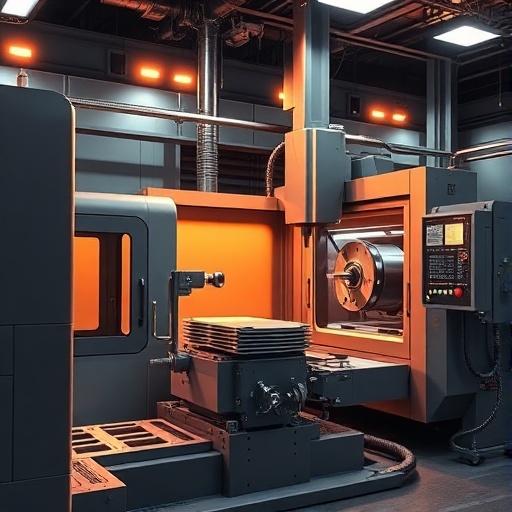
Evaluating CNC Milling and Turning Services
Evaluating CNC milling and turning services starts with assessing certifications like ISO 9001 and AS9100, ensuring providers meet aerospace rigor for parts like avionics housings. Review machine fleets: look for 5-axis CNC mills capable of complex contours and multi-tasking CNC lathes for integrated milling and turning on a single workpiece. Capacity checks include spindle speeds over 20,000 RPM for titanium work and bed sizes accommodating large fuselages. Reputable cnc milling services offer post-processing like anodizing, while turning services provide thread gauging for precision fasteners. Customer testimonials and lead times reveal reliability—aim for shops delivering prototypes in weeks, not months. Software compatibility, such as STEP file support for cnc programming, streamlines integration. By weighing these factors, aerospace teams select partners that deliver quality, speed, and innovation in cnc milling and turning, avoiding costly rework.
Factors Influencing the Selection of CNC Machines
Factors influencing CNC machine selection in aerospace prioritize rigidity and thermal stability to maintain accuracy during prolonged runs on heat-sensitive workpieces. Axis configuration matters: 3-axis suffices for simple brackets, but 5-axis excels for impeller blades requiring undercuts. Spindle power and torque dictate material handling—high values tackle Inconel alloys in engine mounts. Control systems from brands like Fanuc or Siemens offer intuitive cnc programming interfaces, reducing setup times. Cost balances initial investment against ROI, factoring energy efficiency and tool life extension features. Footprint and automation compatibility influence shop layout, especially for integrating robotic loading in milling machines or lathe machines. Vendor support, including training and parts availability, ensures uptime. In aerospace, selecting machines that support subtractive manufacturing with minimal vibration secures the precision needed for mission-critical components, guiding informed decisions.
Case Studies of Successful Aerospace Projects
Case studies illuminate CNC machining's triumphs in aerospace, such as Boeing's use of 5-axis CNC milling to fabricate 787 Dreamliner composite spars, achieving 20% weight savings through precise contouring that traditional methods couldn't match. Another success: NASA's collaboration with a cnc machining services provider for Mars rover wheels, where cnc turning on specialized lathes produced durable titanium treads enduring Martian terrain, completed ahead of schedule via optimized programming. SpaceX's Falcon 9 grid fins showcase cnc milling and turning integration, machining folding mechanisms from stainless steel with tolerances under 0.005 inches, enabling reusable rocket landings. A European consortium leveraged CNC lathes for Airbus A350 landing gear struts, reducing production time by 35% through automated turning services. These projects highlight how selecting the right CNC technologies yields breakthroughs, from cost reductions to enhanced performance, inspiring future endeavors in the field.