Exploring the Role of CNC Machining in Advancing MedTech Innovations
The Evolution of CNC Machining in the Medical Industry
Historical Overview of CNC Machining
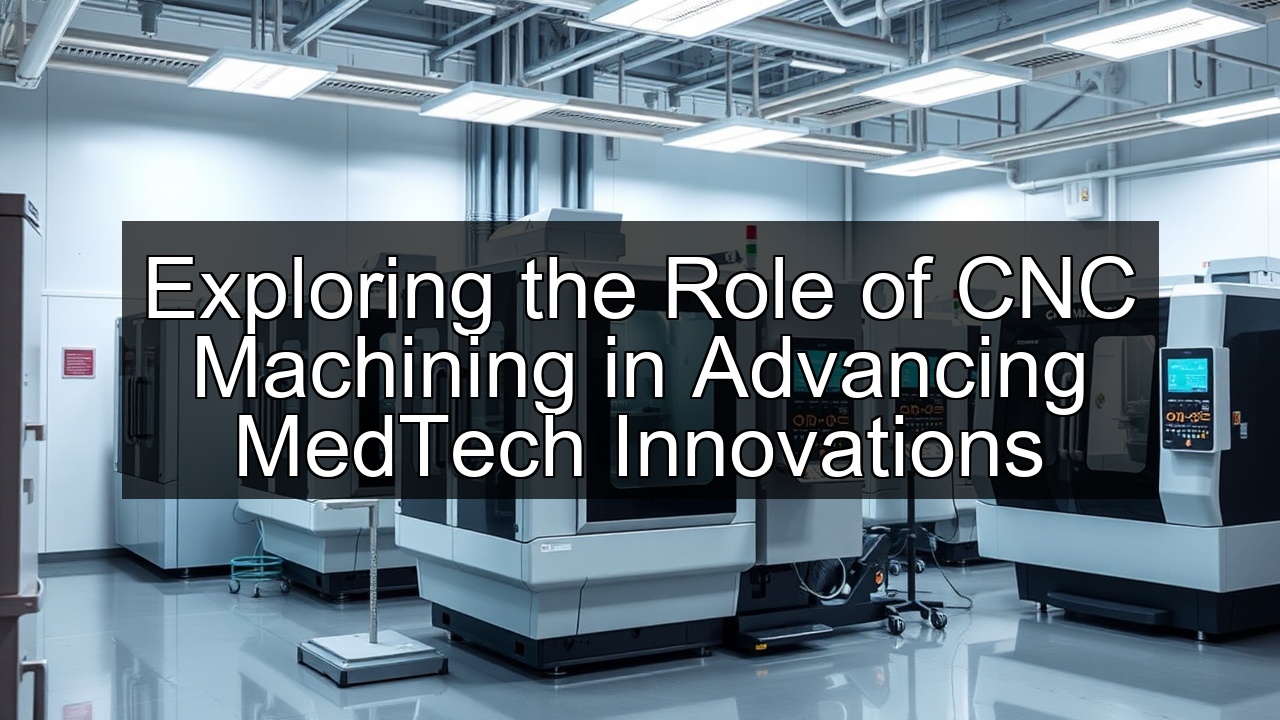
CNC machining revolutionized manufacturing when it emerged in the mid-20th century, starting with basic numerical control systems in the 1940s and evolving into computer-controlled precision by the 1970s. In the medical industry, this technology took root during the 1980s as surgeons and engineers demanded components with exact tolerances for implants and surgical tools. Early adopters used CNC machines to craft prosthetics from metals like titanium, reducing errors that hand-machining often introduced. By the 1990s, medical machining services expanded to include complex geometries for devices like pacemakers and orthopedic plates. Today, machine shops specializing in CNC machining for medical applications integrate software that simulates cuts before production, ensuring biocompatibility and durability. This progression from rudimentary lathes to sophisticated CNC lathe machining has cut production times dramatically, allowing faster delivery of life-saving medical equipment. Experts in the field highlight how CNC milling services paved the way for miniaturization, enabling intricate parts for endoscopic tools that navigate the human body with minimal invasion. As the medical industry grew, so did the need for specialized CNC machining manufacturing, blending engineering prowess with healthcare demands to foster innovations that save lives.
Impact of CNC Technology on MedTech Innovations
CNC technology drives MedTech innovations by enabling rapid prototyping and customization of medical devices, directly impacting patient outcomes in healthcare. Manufacturers leverage CNC machines to produce high-precision components for robotic surgery systems, where tolerances as tight as 0.001 inches prevent failures during operations. This precision machining services approach accelerates development cycles, allowing companies to iterate designs quickly and bring advanced medical machining solutions to market faster. In orthopedics, CNC machining for medical creates patient-specific implants using 3D scans, improving fit and recovery times. The integration of CNC turning and milling in medical device machining services has spurred breakthroughs in minimally invasive procedures, reducing risks for patients. Moreover, CNC machining services support the creation of diagnostic tools with intricate channels for fluid handling, enhancing accuracy in labs and hospitals. As MedTech evolves, these capabilities address machining in the medical industry challenges, such as biocompatibility and sterilization requirements. Industry leaders report that CNC machined parts contribute to over 70% of modern medical technologies, underscoring their role in elevating health standards worldwide. This technology not only streamlines manufacturing but also empowers engineers to push boundaries in medical engineering services, ultimately benefiting millions through reliable, innovative solutions.
Key Players in Medical CNC Machining
Leading medical machining companies dominate the landscape of CNC machining services, with firms like McCormick Industries setting benchmarks through their expertise in precision medical component machining. These machine shops offer contract medical machining tailored to OEMs, ensuring seamless integration into supply chains for medical device manufacturers. Other key players include specialized providers of medical precision machining, who excel in producing titanium alloys and PEEK components for implants. In the competitive arena of machining services for healthcare, companies with ISO certifications stand out, delivering medical machining solutions that meet FDA standards. Swiss-style machining experts bring unparalleled accuracy to small-diameter parts, vital for catheters and stents in the medical industry. Global manufacturers focus on medical machining applications, from orthopedic tools to cardiovascular devices, partnering with healthcare innovators. These entities drive medical machining capabilities forward, investing in state-of-the-art CNC machines to handle diverse materials like stainless steel and nylon. As demand for medical parts manufacturing grows, these key players expand their offerings in medical fabrication services and medical tooling services, supporting the ecosystem of MedTech. Their contributions ensure that machining medical remains a cornerstone of innovation, providing reliable services variations to meet evolving needs in patient care.
Materials and Techniques in Medical Machining
Common Materials: Titanium Alloys, PEEK, and ULTEM
Titanium alloys lead as a preferred material in medical machining services due to their strength, lightweight nature, and corrosion resistance, making them ideal for implants like hip replacements and spinal rods. Machinists use CNC milling to shape titanium into biocompatible forms that integrate seamlessly with human tissue, minimizing rejection risks for patients. PEEK, a high-performance plastic, shines in applications requiring flexibility and radiolucency, such as spinal cages and dental prosthetics; its machinability allows CNC turning to create smooth surfaces that reduce wear on surrounding anatomy. ULTEM, another advanced thermoplastic, withstands autoclave sterilization and high temperatures, perfect for surgical instruments and housings in medical equipment. Medical machining companies select these materials for their FDA-approved status, ensuring safety in healthcare settings. In CNC machining manufacturing, experts blend titanium with polymers like PEEK to engineer hybrid devices that combine rigidity and elasticity. This material synergy supports medical device machining services, enabling production of components for endoscopy and orthopedics. As techniques evolve, machine shops incorporate polyethylene and nylon variants to enhance durability, addressing medical machining techniques for long-term implants. These choices not only optimize performance but also advance medical technologies, delivering tools that improve surgical precision and patient recovery.
The Role of Stainless Steel and Aluminum in Medical Devices
Stainless steel anchors medical devices with its durability and ease of sterilization, serving as the backbone for surgical tools, forceps, and biopsy instruments in the medical industry. CNC machining services shape 316L stainless steel into precise geometries, resisting bodily fluids and repeated use without degrading. Aluminum, valued for its lightweight properties and thermal conductivity, finds roles in diagnostic equipment housings and portable medical machinery services, where weight reduction aids mobility for healthcare providers. Machine shops employ CNC lathe machining to mill aluminum parts for ventilator components, ensuring heat dissipation during critical operations. Brass and polyvinyl chloride (PVC) complement these metals in less demanding applications, like connectors and tubing in infusion systems. In machining for medical devices, stainless steel's machinability supports intricate designs for orthopedic screws, while aluminum's cost-effectiveness drives volume production of non-implantable tools. These materials undergo rigorous testing in medical machining solutions to confirm biocompatibility, aligning with standards for patient safety. As medical machining contractors innovate, they explore alloys of stainless steel for enhanced strength in load-bearing devices. This strategic use propels medical manufacturing services, enabling reliable performance in diverse healthcare scenarios and fostering advancements in medical variations for specialized needs.
Advanced Machining Techniques: EDM, CNC Turning, and Milling
Electrical Discharge Machining (EDM) excels in medical machining by eroding hard materials like titanium using controlled sparks, ideal for crafting micro-features in stents and pacemaker leads without mechanical stress. CNC turning rotates workpieces on lathes to produce cylindrical medical components, such as catheter shafts from PEEK or stainless steel, achieving sub-micron accuracy for smooth insertions. Milling, through CNC milling services, carves complex 3D shapes from aluminum blocks for surgical guides, integrating multi-axis capabilities to handle intricate medical part machining. Laser techniques complement these, etching precise markings on implants for traceability in medical equipment. In advanced medical machining solutions, EDM pairs with CNC turning to minimize burrs on delicate nylon or ULTEM parts, enhancing functionality in diagnostic tools. Machine shop services for the medical industry prioritize these methods to meet tolerances demanded by FDA regulations. CNC machining for medical applications often combines turning and milling in hybrid setups, streamlining production of orthopedic instruments. Experts in medical machining technology emphasize how these techniques reduce waste and lead times, supporting machining services variations for custom orders. Overall, they elevate medical precision machining, ensuring components withstand sterilization and perform reliably in patient care environments.
Quality Standards and Certifications in Medical Machining
Understanding ISO 9001 and ISO 13485 Standards
ISO 9001 establishes a framework for quality management in CNC machining services, focusing on consistent processes that prevent defects in medical components like titanium implants. Medical machining companies adopt this standard to streamline operations, from material selection to final inspection, ensuring reliability across manufacturing. ISO 13485 builds on it specifically for medical devices, mandating risk-based controls for design, production, and distribution of items like PEEK prosthetics. Compliance involves documented procedures for CNC turning and milling, traceability of batches, and supplier audits to safeguard patient health. In the medical industry, these ISO standards drive excellence in medical machining services, with certified machine shops conducting regular audits to maintain certification. They address medical machining capabilities by integrating validation for processes like EDM, reducing contamination risks in cleanroom settings. Manufacturers benefit from ISO 13485's emphasis on post-market surveillance, allowing quick responses to device performance in healthcare. As standards evolve, they incorporate digital tools for real-time monitoring in CNC machining manufacturing. This rigorous adherence not only meets regulatory demands but also builds trust among OEMs seeking medical device machining services, ultimately enhancing safety and efficacy for end-users.
The Importance of AS9100 Certification for Medical Equipment
AS9100 certification elevates medical equipment production by layering aerospace-level quality controls onto medical machining, crucial for high-stakes devices like imaging scanners and robotic arms. It demands counterfeit part prevention and configuration management in CNC machining services, ensuring components from stainless steel or aluminum meet stringent specs. Medical machining contractors pursue AS9100 to demonstrate commitment to zero-defect manufacturing, vital for tools used in life-support systems. This certification integrates with ISO requirements, adding focus on supply chain integrity for materials like ULTEM and titanium alloys. In medical CNC machining services, AS9100 facilitates advanced inspections using CMM tools, verifying dimensions on milled parts for surgical precision. Healthcare providers prefer certified suppliers for their proven track record in reducing recalls, as seen in orthopedic and cardiovascular applications. Machine shops with AS9100 certification invest in employee training for processes like surface finishing, minimizing variability in medical part machining. It also supports international trade by aligning with global standards, benefiting exporters of medical technologies. Ultimately, AS9100 certification fortifies the ecosystem of medical manufacturing services, delivering dependable medical machinery services that prioritize patient safety and innovation.
Quality Control Processes in CNC Machining Services
Quality control in CNC machining services begins with incoming material inspections, verifying titanium alloys and PEEK for purity before loading into CNC machines. In-process checks during turning and milling use gauges to monitor tolerances, preventing deviations in medical devices like stents. Final inspections employ non-destructive testing, such as X-ray for internal flaws in stainless steel components, ensuring compliance with FDA guidelines. Medical machining solutions incorporate statistical process control to track variations, enabling predictive maintenance on lathes and mills. Documented protocols in machine shops cover everything from tool calibration to environmental monitoring, reducing contamination in healthcare-bound parts. Advanced software integrates with CNC systems for real-time data analysis, flagging anomalies in EDM operations. These processes extend to packaging, where sterile seals protect finished medical equipment. Certified providers like those with ISO 9001 emphasize root-cause analysis for any issues, fostering continuous improvement in medical precision machining. By prioritizing these controls, CNC machining for medical delivers consistent results, supporting machining services for healthcare and enhancing trust in medical component machining. This thorough approach not only meets standards but also drives efficiency, allowing faster market entry for innovative medical technologies.
CNC Machining Services for Medical Device Manufacturing
Contract Medical Machining: Partnering with OEMs
Contract medical machining forges strong partnerships between specialized machine shops and OEMs, providing scalable production of custom medical devices from concept to volume runs. OEMs rely on these services for expertise in CNC milling services, turning raw titanium into finished implants with minimal lead times. Providers offer end-to-end solutions, including prototyping PEEK components and scaling to high-volume stainless steel tools, all under strict confidentiality. In medical machining companies, contracts outline specs for design for manufacturability, ensuring cost-effective designs that OEMs can integrate seamlessly. This collaboration accelerates innovation in medical engineering services, with contractors handling regulatory submissions to FDA for approval. Machine shop services for the medical industry customize workflows, incorporating swiss machining for micro-parts in neurology applications. Benefits include access to advanced CNC lathe machining without in-house investment, freeing OEMs to focus on R&D. Successful partnerships, like those with McCormick Industries, yield reliable medical fabrication services, reducing supply chain risks. As demand grows, these contracts evolve to include just-in-time delivery, supporting dynamic needs in healthcare and medical variations. Ultimately, contract medical machining empowers OEMs to deliver superior products that advance patient care.
Design for Manufacturability in Medical Device Production
Design for manufacturability (DFM) optimizes medical device production by aligning engineering intent with CNC machining realities, minimizing costs while maximizing precision for components like aluminum housings. Engineers collaborate early with medical machining services to refine CAD models, eliminating features that complicate milling or turning, such as undercuts in ULTEM parts. This approach ensures biocompatibility from the start, selecting materials like nylon or PVC that machine efficiently without compromising health standards. In medical device machining services, DFM simulations predict tool paths, avoiding collisions in multi-axis CNC setups and reducing scrap rates. For orthopedic tools, DFM incorporates tolerances that facilitate sterilization, enhancing usability in surgical settings. Machine shops apply DFM principles to iterate prototypes rapidly, using feedback loops to improve designs for injection molding hybrids with CNC machined metals. This methodology cuts development time by up to 30%, as reported by industry experts, allowing faster FDA clearances. In the broader context of medical manufacturing services, DFM fosters innovation in medical tooling services, creating devices that perform reliably under real-world stresses. By embedding manufacturability, it bridges gaps between design teams and production, delivering efficient, high-quality medical parts manufacturing that benefits patients and providers alike.
Surface Finishing Techniques for Medical Components
Surface finishing techniques polish medical components to achieve smoothness that prevents bacterial adhesion on titanium implants, using processes like electropolishing to remove micro-imperfections after CNC machining. Bead blasting treats stainless steel tools for uniform matte finishes that reduce glare in operating rooms, while passivation enhances corrosion resistance on aluminum parts. In medical machining applications, anodizing colors and hardens surfaces on machined PEEK for aesthetic and functional durability in wearable devices. Laser etching adds identifiers without material removal, ensuring traceability in medical equipment. These methods integrate post-machining, with CNC milling services followed by vibratory finishing to deburr nylon edges gently. Experts in medical precision machining select techniques based on application—electropolishing for blood-contacting stents, powder coating for non-implantable housings. Compliance with ISO standards guides finishes to support sterilization cycles, maintaining integrity over repeated uses. Advanced options like diamond-like carbon (DLC) coatings boost wear resistance on surgical instruments, extending lifespan in healthcare. Surface finishing not only elevates aesthetics but also functionality, reducing friction in joint replacements and improving patient comfort. Through these techniques, medical machining solutions ensure components meet the highest standards of safety and performance.
Future Trends in CNC Machining for MedTech
Emerging Technologies in Medical Machining
Emerging technologies like AI-driven CNC systems predict optimal tool paths for machining titanium alloys, slashing production times for complex medical devices by analyzing data in real-time. Additive-subtractive hybrids combine 3D printing with CNC milling services, allowing seamless creation of lattice-structured implants from PEEK that promote bone ingrowth. Nanotechnology integration enables surface modifications at the molecular level, enhancing biocompatibility of stainless steel components for neural interfaces. In medical CNC machining services, 5G connectivity links machines for remote monitoring, enabling global collaboration on medical engineering services. Quantum sensors improve measurement accuracy in quality checks, vital for micro-parts in cardiovascular tools. Machine shops adopt these innovations to tackle medical machining challenges, such as customizing prosthetics via machine learning algorithms that adapt to patient scans. Blockchain ensures supply chain transparency for materials like ULTEM, from sourcing to delivery. These trends promise hyper-personalized medical technologies, reducing surgery risks and recovery periods. As medical machining technology advances, it intersects with biotech, fostering regenerative devices machined with unprecedented precision. This evolution positions CNC machining as a pivotal force in MedTech, driving sustainable growth in healthcare innovations.
The Role of Cleanroom Environments in Manufacturing
Cleanroom environments safeguard medical machining by controlling particulates during CNC operations, essential for producing sterile components like catheters from nylon or PVC. Class 10000 cleanrooms house CNC machines, with HEPA filters maintaining air purity to prevent contamination in titanium implants. Operators don specialized garb, and processes like EDM occur under laminar flow hoods to isolate sensitive areas. In medical device manufacturing, cleanrooms integrate with ISO 13485 protocols, verifying environmental controls via particle counters and microbial swabs. These spaces enable high-volume runs of aluminum diagnostic parts without post-process cleaning risks. Medical machining companies invest in modular cleanrooms for flexibility, scaling from prototyping to full production of surgical tools. Humidity and temperature regulation protects hygroscopic materials like ULTEM, ensuring dimensional stability. Cleanrooms also support hybrid manufacturing, blending CNC turning with assembly for complete medical equipment. Their role extends to validation, simulating sterilization to confirm part integrity. By minimizing defects, cleanrooms boost yield rates in medical precision machining, aligning with FDA expectations. This controlled setting not only upholds quality but also accelerates time-to-market for life-critical innovations in healthcare.
Sustainability and Material Innovations in Medical Machining
Sustainability reshapes medical machining through recyclable materials like bio-based PEEK alternatives, reducing environmental impact while maintaining performance in implants. CNC machining services optimize waste by nesting parts efficiently on titanium sheets, minimizing scraps in production. Energy-efficient CNC machines with regenerative drives lower carbon footprints for manufacturing medical devices. Innovations include plant-derived polymers akin to nylon for non-critical tools, biodegradable yet machinable via standard milling. In medical machining solutions, closed-loop water systems in finishing processes recycle resources, supporting green certifications. Manufacturers explore upcycled aluminum from medical equipment scraps, promoting circular economy principles in healthcare. These shifts address regulatory pressures for eco-friendly medical technologies, without sacrificing biocompatibility. Advanced simulations guide material selection, favoring low-toxicity options like polyethylene variants for disposables. Sustainability enhances brand value for OEMs partnering in contract medical machining, appealing to eco-conscious stakeholders. Future innovations promise self-healing coatings on machined stainless steel, extending device life and reducing replacements. By embedding green practices, medical machining contractors lead the charge toward responsible innovation, balancing patient health with planetary well-being in MedTech advancements.
See Also
- From Concept to Creation the Journey of Medical Device Machining
- Enhancing Medical Component Design with Advanced Machining Technologies
- The Future of Medical Machining Solutions in a Rapidly Evolving Industry
- Understanding CNC Machining Techniques for Medical Equipment Production
- A Deep Dive into Cleanroom Machining for Healthcare Applications